What is Medicare Remote Patient Monitoring?

The Guide to RPM in 2026: Reimbursements, Rules and CPT Codes

How can providers optimize this Medicare program?

ThoroughCare provides a CMS-compliant platform for Remote Patient Monitoring (RPM) in 2026, enabling providers to improve outcomes and capture reimbursement for CPT codes 99453, 99454, 99445, 99470, 99457 and 99458.

Remote Patient Monitoring (RPM): How It Benefits Patients

What is Remote Patient Monitoring?

A way to manage conditions
with continuous patient data

Remote Patient Monitoring (RPM) is a CMS-reimbursable clinical service that uses FDA-cleared medical devices to digitally transmit a patient's physiological data from home to their healthcare provider.

Unlike traditional telehealth, RPM is a care management service focused on data-driven interventions. In 2026, the program supports both chronic (long-term) and acute (short-term, 2-15 day) monitoring.

Square v1_Remote Patient Monitoring

RPM engages patients at home
through FDA-cleared devices

How it Works: From Data to Action

Providers use these continuous health trends to inform treatment plans, including:

  • Individual Care Planning: Tailored goals based on real-time biometric trends.
  • Proactive Engagement: Clinical staff outreach triggered by "out-of-range" alerts.
  • Medication Optimization: Adjusting prescriptions based on daily physiological response (e.g., blood pressure or glucose).
  • Referrals & Care Coordination: Seamlessly connecting patients to specialists when data indicates a decline.
Square v2_Web App-2

Qualified providers span care teams

RPM billing must be directed by a provider with an NPI number. That said, a diverse set of licenses can deliver the program, including:

  • Physicians
  • Physician assistants
  • Nurse practitioners
  • Certified nurse midwives
  • Clinical nurse specialists
  • Pharmacists
Square v2_LowerCosts-2

How different healthcare providers use RPM

ThoroughCare offers case studies and solutions-based content to educate about the different ways remote monitoring can support patients and practices. 

Providers use RPM to oversee common chronic conditions

Remote monitoring data can enhance care for, but not limited to:

  • Cardiovascular disease
  • Chronic Obstructive Pulmonary Disease (COPD)
  • Diabetes
  • Hypertension
  • Sleep apnea
  • Weight loss or gain

Read an Article

Square v1_Who We Support-Home Health-1

What makes patients eligible for Remote Patient Monitoring?

Remote Patient Monitoring (RPM) eligibility in 2026 is no longer limited to long-term chronic care. The program now supports a broader range of clinical needs, including short-term recovery and episodic care.

  • Chronic or Acute Conditions: Patients qualify if they have a long-term chronic disease or an acute/episodic condition (such as post-surgical recovery, infection monitoring, or medication titration).

  • No "12-Month" Minimum: Unlike Chronic Care Management (CCM), RPM can be utilized for short-term medical needs.

  • Medical Necessity: The service must be ordered by a physician or other qualified healthcare professional (QHCP) as part of a treatment plan for a specific diagnosis.

  • "2-Day" Threshold: Providers can enroll and bill for patients with as few as 2 days of data transmission per month (using CPT 99445), making the program viable for acute cases.

How do patients enroll in RPM?

Enrollment is completed at an in-person evaluation or Annual Wellness Visit. Written or oral consent must be documented.

The provider should explain to the patient:

  • How RPM can benefit them
  • Medicare Part-B's 80% coverage with co-pay
  • That they can opt out at any time
Square v1_Improve Patient Engagement-1


Understanding 2026 Remote Patient Monitoring CPT codes:
99470, 99457, 99453, 99454, and more

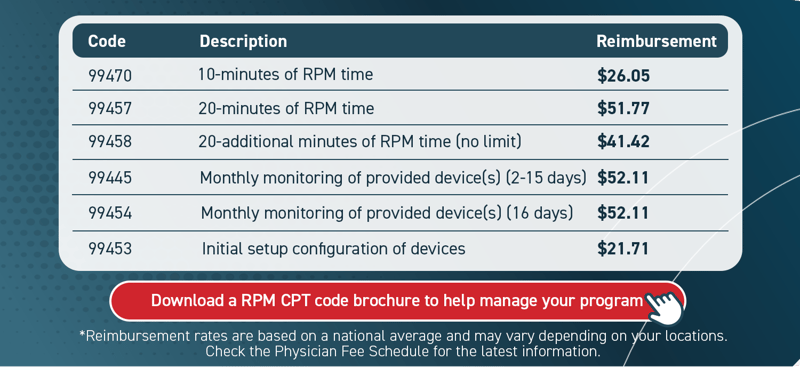
2026 Remote Patient Monitoring CPT codes and reimbursement rates: 99470 ($26.05), 99457 ($51.77), 99445 ($52.11), 99454 ($52.11).


How does RPM billing work for providers?

In 2026, CMS expanded the RPM code set to provide greater clinical flexibility. Providers can now choose between codes based on the amount of data collected and the time spent on management.

Initial setup and education

  • 99453: A one-time code for the initial setup and patient education on how to use the device. Effective 2026, the initial setup code can be billed once a patient has transmitted at least 2 days of data, aligning with the new requirements for acute and episodic monitoring. Rate: $21.71

Device supply and data transmission

You must choose one of these codes per 30-day period based on how many days the patient transmitted data. They are not additive.

  • CPT 99445 (New): Short-Window Monitoring
    • Data Requirement: 2–15 Days of readings
    • 2026 National Average: $52.11
  • CPT 99454: Standard Monitoring
    • Data Requirement: 16–30 Days of readings
    • 2026 National Average: $52.11

Strategic Insight: CMS has valued 99445 at the same rate as 99454. This means you no longer lose reimbursement if a patient fails to reach the 16-day threshold, provided they hit at least 2 days of transmission.

Care management services

These codes cover the time your clinical staff spends reviewing data and interacting with the patient. Choose the code that matches your cumulative monthly time.

  • 99470 (New | 10–19 Minutes): Use this for acute check-ins. Requires at least one interactive communication. Rate: $26.05
  • 99457 (20 Minutes): The standard monthly management code. Requires at least one interactive communication. Rate: $51.77
  • 99458 (Add-on): Each additional 20 minutes of management time beyond the initial 20. Rate: $41.42

Best practices for 2026 compliance

To ensure audit-readiness and maximize ROI, follow these three rules:
  1. The "Non-Additive" Rule: You cannot bill 99445 and 99454 in the same month. Your software should automatically detect which threshold was met on day 30 and assign the correct code.

  2. Interactive Communication: Both 99470 and 99457 require at least one real-time interactive communication (phone call or video) with the patient or caregiver per month.

  3. FDA Compliance: Devices must be FDA-cleared and capable of automatic data transmission. Manual entry (e.g., a patient texting a photo of their scale) does not qualify for reimbursement.

To bill for RPM, providers must meet specific requirements

Delivered either by phone or a telehealth platform, RPM is billable when at least 20 minutes are spent with the patient performing appropriate tasks. RPM services can include:

  • A monthly clinical review
  • Telephone calls
  • Physician reviews
  • Referrals
  • Prescription refills
  • Chart reviews
  • Scheduling appointments or services

Providers can successfully submit
Remote Patient Monitoring claims by:

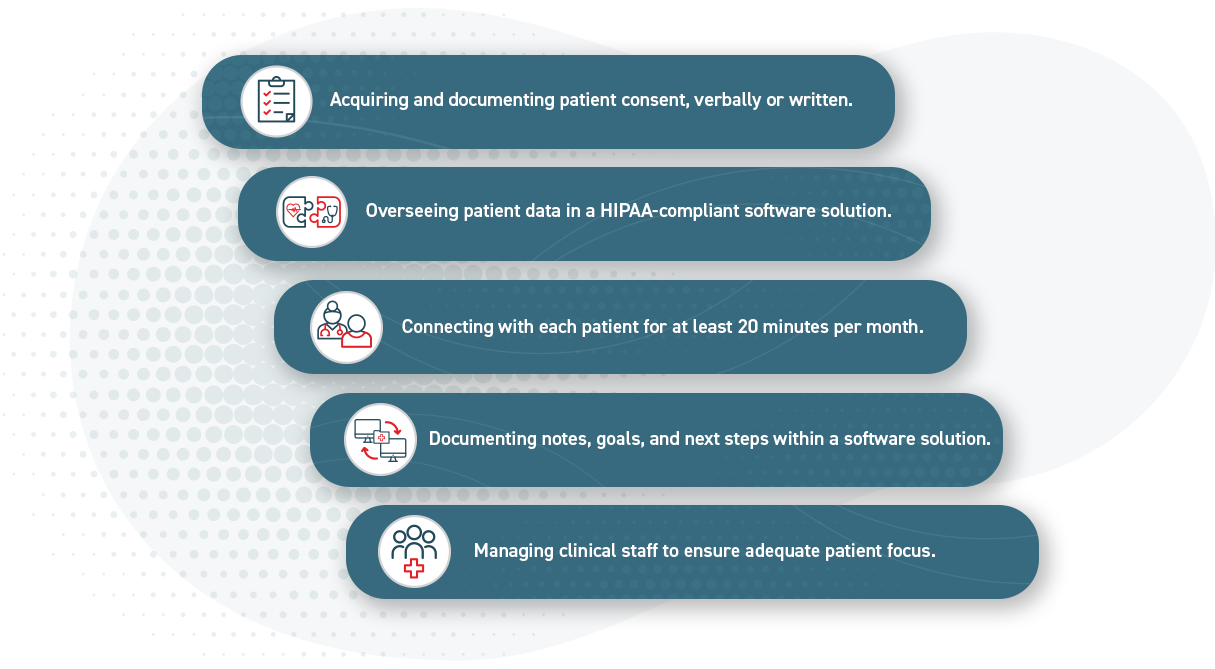
Actions healthcare providers must take to bill for RPM 2026, including acquiring and documenting patient consent, overseeing patient data, connecting with each patient for at least 10 minutes per month, documenting notes, goals and next steps and managing clinical staff.

How to start an RPM program

Before starting a program, it's important to consider: 

  • Your plan to enroll and deliver services to patients
  • Hiring a certified care manager
  • Targeting a specific population or conditions
  • Using software for care planning, data collection, and billing
Square v1_WWS-Physican Groups-1

Initial steps to launching an RPM program

Apart from understanding RPM's rules and requirements, providers should:

Care managers engage patients and facilitate RPM program services

Care managers play a crucial role in delivering remote monitoring services to patients. They conduct a majority of patient engagement and execute nearly all program services.

Remote Patient Monitoring devices capture patient data from home

RPM devices collect daily vital data and send it to the provider for ongoing review. Devices must meet criteria for a designated medical device, as determined by the Food and Drug Administration.

These can include:

  • Blood pressure monitors
  • Glucometers
  • Heart rate monitors
  • Pulse oximeters
  • Spirometers
  • Thermometers
  • Weight scales

What is considered RPM data?

RPM data can include:

  • Weight
  • Blood pressure
  • Blood glucose
  • Heart rate

RPM data should be collected through a resource compliant with the Health Insurance Portability and Accountability Act.

Square v2_Improve Patient Engagement-2

Primary care providers lead RPM adoption for chronic conditions

Data collected and analyzed by Definitive Healthcare indicate that cardiologists and primary care physicians are the main RPM adopters, with nephrologists, pulmonologists, emergency medicine, and pain management specialists making up a smaller but influential group.

Conditions like heart disease, diabetes, and chronic lung disease are not only the deadliest chronic illnesses in the US, but the most prevalent monitored via RPM.

Square v1_Training & Onboarding

Data enables early detection

In the specialist care setting, RPM devices can target specific conditions and clinical measures.

RPM data provides an early detection alert when a patient’s clinical picture worsens, but symptoms haven’t surfaced yet.

An adult oncology hospital-at-home program found that during the first 30 days of enrollment, patients in the program were 58% less likely to be admitted for an unplanned hospital stay. 

Square v1_LowerCosts-1

At-home access for rural care

For rural health clinics, RPM helps fill gaps in care. Research demonstrates RPM’s efficacy in rural settings, particularly for diabetes, heart failure, and chronic obstructive pulmonary disease (COPD).

An RPM program can also capitalize on providers’ strengths in nurturing personal relationships and maximizing limited resources. They can leverage close ties to the community and collaborate toward quality improvement efforts.

Square v2_ValueBasedCare 1

RPM coding is the same
for rural clinics and centers

CMS has retired the G0511 'umbrella' code for RHCs and FQHCs.

These clinics can now bill individual RPM CPT codes, allowing for more accurate reimbursement that reflects the actual complexity and time spent on patient care.

Read an Article

2026 Remote Patient Monitoring CPT Codes. All You Need to Know About Reimbursement Increases.

Remote Patient Monitoring promotes value-based care

RPM can be a versatile tool to maximize care quality and performance.

Though it's a fee-for-service program, RPM can help providers address value-based care objectives without sacrificing financial stability.

Read an Article

Square v1_Dashboard & Analytics

RPM programs enable comprehensive care coordination

Enrollment in RPM provides patients access to individual care planning, monthly touchpoints with the greater care team, referral services, prescription refills, and physician reviews. 

Providers can use RPM programs to seamlessly coordinate care.  

Read an Article

Square v1_Platform Integration

MetaPhy Health uses software to deliver Remote Patient Monitoring

Since 2017, ThoroughCare has helped MetaPhy Health optimize care delivery for patients with multiple chronic conditions. 

Learn how MetaPhy Health uses our care coordination platform. 
Watch a Case Study

thumbnail_metaphy_case_study with play

RPM can be combined
with other Medicare programs

This can further support patient outcomes and generate additional reimbursement.

RPM + Chronic Care Management

Medicare covers patients enrolled in both programs, incentivizing providers to deliver comprehensive chronic disease management.

Collecting and sharing biometric and patient-reported data enables care teams to look for concerning trends and shift tactics when necessary. Also, having real-time notifications that clinicians and patients can review informs care from daily living, not just periodic appointments or estimates over the phone.

Health plans play a critical role
in Remote Patient Monitoring

According to America’s Health Insurance Plans, healthcare organizations are seeing evidence of reductions in utilization, readmissions, and on-call visits, as well as increases in member satisfaction.

RPM claims grew by nearly 1,300% over the last three years.

Read an Article

Square v1_Enabled Coordinated Care-1a


Pharmacies can increase access to Remote Patient Monitoring

Providers can partner with pharmacies for program delivery

Primary care shortages, value-based contracting and increasing chronic illness call for pharmacists to have an expanded role. 

Through partnerships, providers can work with pharmacies to streamline care management and improve patient engagement.

Pharmacists are uniquely positioned and skilled for RPM

  • Accessibility: Ninety percent of people in the US live within five miles of a community pharmacy.
  • Frequency: Patients interact with their pharmacist up to 12 times more frequently than their primary care physician.
  • Skills: Pharmacists have counseling and education skills that support RPM activities.
  • Chronic illness: Pharmacists understand many aspects of chronic diseases and their interactive influences.
  • Drug therapy: Pharmacists are drug therapy management experts, which is crucial because most chronic illnesses require multiple medications.

Read an Article

Square v2_Enabled Coordinated Care-2

Software enables Remote Patient Monitoring

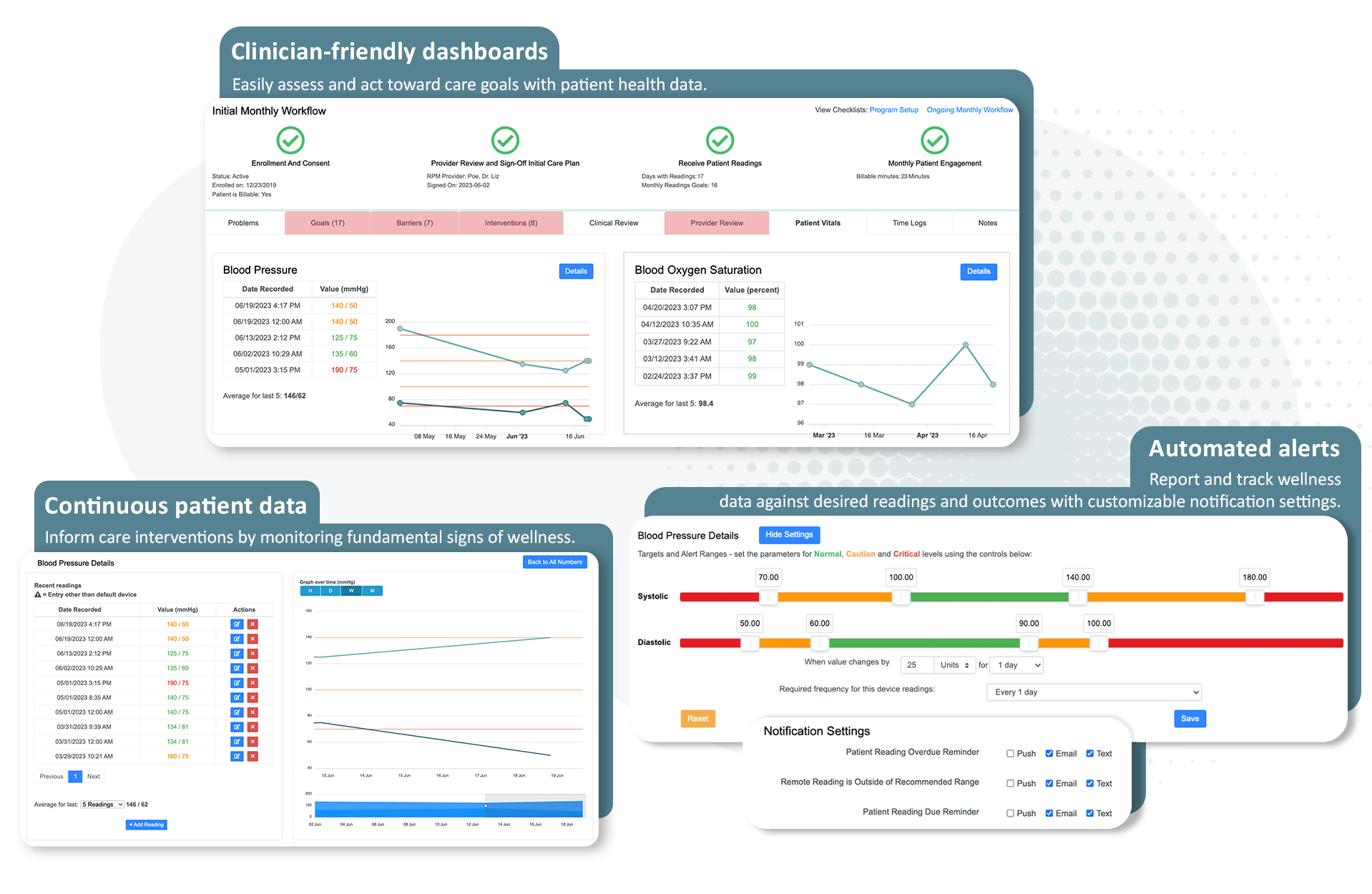
Capture and analyze patient health data continuously to inform condition manage, monitor risks, and report and track overall wellness. 
rpm screenshot group v2-min

ThoroughCare streamlines
Remote Patient Monitoring

Our software platform is intuitive and designed for RPM’s rules and requirements. ThoroughCare can help:
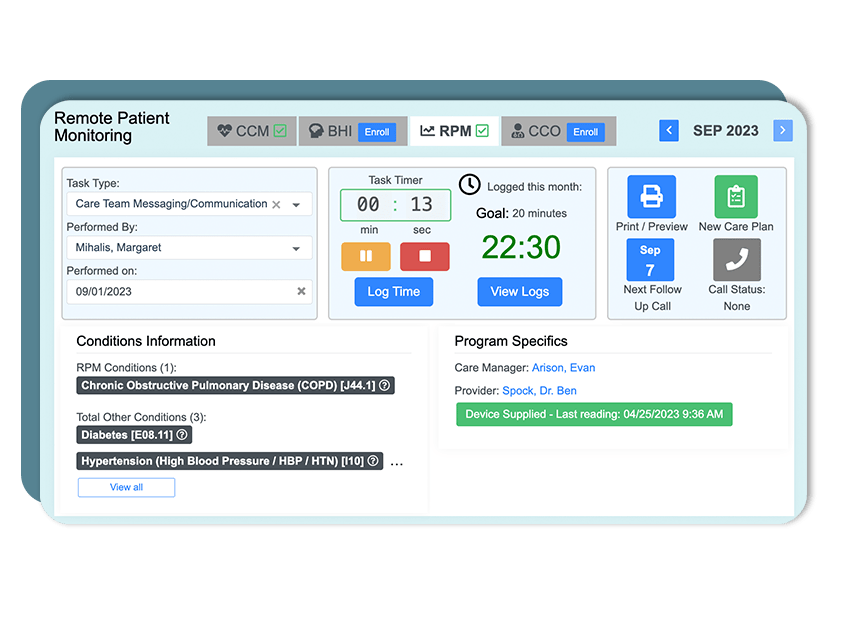
  • Facilitate patient consent and enrollment
  • Leverage AI to spend more time with patients, not paperwork
  • Integrate with RPM devices to capture data
  • Visualize data with analytics for actionable insight
  • Create and maintain goal-driven care plans
  • Simplify claim submission and documentation requirements

Request a Software Demo View Solution

rpm screenshot patient dashboard-min