
Healthcare organizations looking to scale care management programs often face the same challenge. How do you maintain consistency, quality, and operational efficiency while rapidly growing your team?
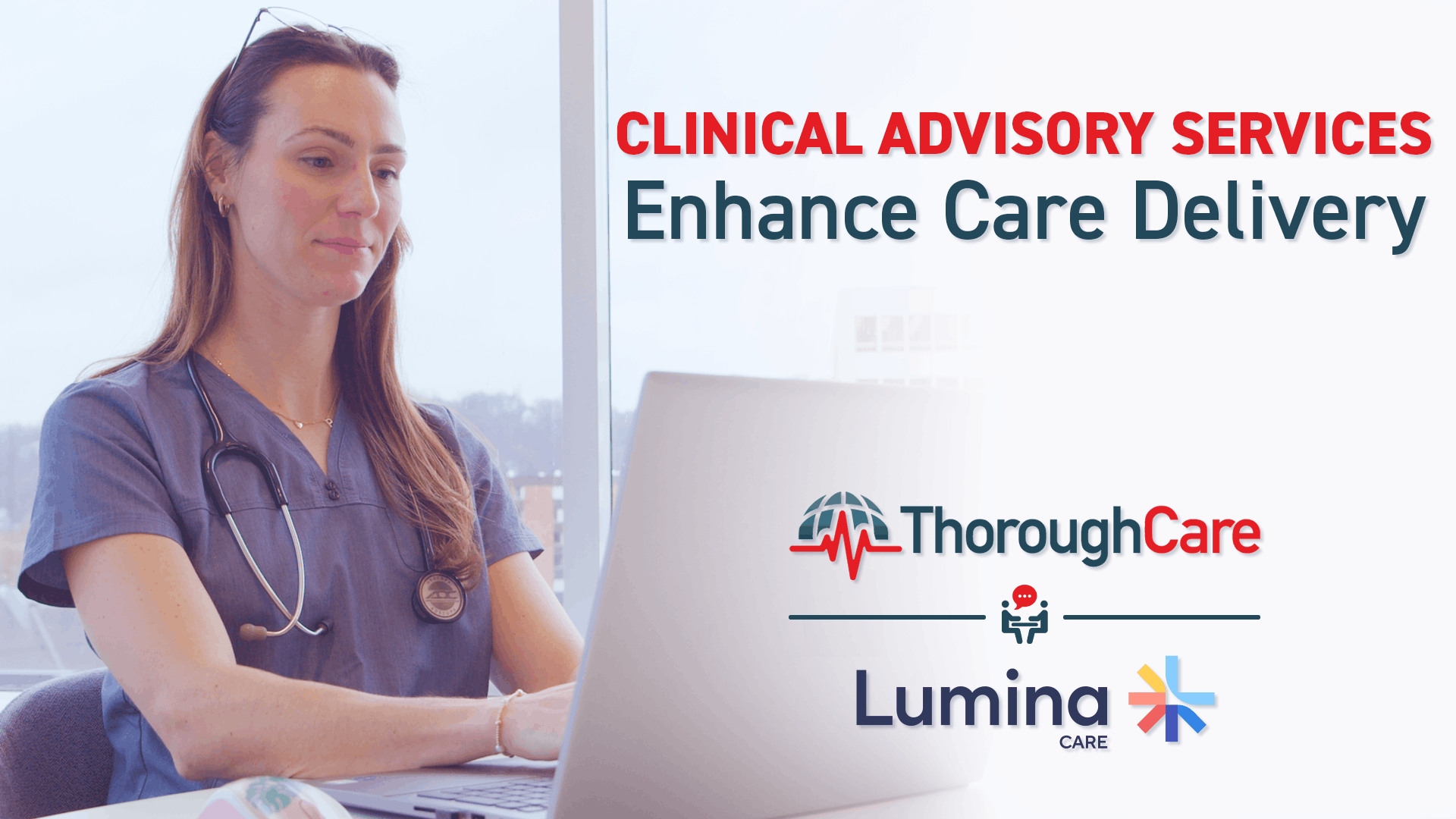
For Lumina Care, the answer came through an operational partnership with ThoroughCare.
From startup beginnings to a nationwide telehealth care management organization, Lumina Care leveraged customized workflows, clinical onboarding support, SMART goals, and scalable care coordination technology to grow to more than 400 across the country.
Building a Scalable Care Management Foundation
When Lumina Care launched, the organization had ambitious goals, but limited internal resources.
According to Ben Zirman, Lumina Care's Senior Vice President, Lumina Care relied heavily on ThoroughCare’s clinical services team to develop workflows, templates, and operational processes that could support rapid growth without sacrificing quality.
The partnership focused on creating efficient and repeatable care management systems that aligned with:
- Internal operational goals
- Skilled nursing facility partner expectations
- Patient-centered care delivery
- Compliance and documentation consistency
- Scalable onboarding and training
This collaborative approach allowed Lumina Care to create a standardized framework for delivering care management services nationwide.
Customized Workflows for Multiple Care Management Programs
One of the biggest advantages Lumina Care highlighted was ThoroughCare’s ability to customize workflows for different healthcare programs and reimbursement models.
These included:
Chronic Care Management (CCM)
ThoroughCare supported Lumina Care with customized Chronic Care Management workflows that helped care managers coordinate long-term care for patients with multiple chronic conditions.
Customized CCM workflows improved:
- Documentation consistency
- Care plan standardization
- Patient engagement tracking
- Coordination between providers and facilities
Behavioral Health Integration (BHI)
Behavioral Health Integration programs require close coordination between physical and behavioral healthcare teams.
Lumina Care used customized BHI workflows to improve:
- Communication between care teams
- Follow-up tracking
- Patient monitoring
- Behavioral health documentation
Collaborative Care Model (CoCM)
The Collaborative Care Model requires highly coordinated clinical workflows involving primary care providers, psychiatric consultants, and behavioral health managers.
Through customized software configurations, Lumina Care was able to streamline:
- Team communication
- Escalation workflows
- Documentation processes
- Patient progress tracking
SMART Goals Improved Actionable Care Planning
A major enhancement was the implementation of SMART goals across care management services.
SMART goals are:
- Specific
- Measurable
- Achievable
- Relevant
- Time-sensitive
By incorporating SMART goals into care plans, Lumina Care created more actionable patient objectives that aligned with client expectations and improved accountability across care teams.
This approach helped care managers:
- Track measurable progress
- Set realistic timelines
- Improve patient engagement
- Deliver more outcome-focused care
Organizations adopting SMART goals within care management programs often see stronger alignment between patient care plans and operational quality metrics.
Scaling a Fully Remote Care Management Workforce
One of the most impressive outcomes from the partnership was Lumina Care’s rapid workforce growth.
Scaling remote healthcare teams introduces operational challenges such as:
- Standardized training
- Consistent documentation
- Workflow adherence
- Quality assurance
- Communication alignment
To support this expansion, ThoroughCare helped Lumina Care develop:
- Onboarding and training materials
- Workflow guidance
- Documentation standards
- Quality checkpoints
- Automated workflow flags and alerts
These systems ensured care managers could deliver consistent services regardless of geographic location.
Workflow Automation Improved Consistency and Compliance
Lumina Care also emphasized the importance of workflow automation within the platform.
Configured workflows helped:
- Flag missing documentation
- Highlight required actions
- Identify opportunities to go above and beyond standard care delivery
- Improve consistency across care plans
Operational automation is becoming increasingly important in value-based care environments where organizations must balance scalability with compliance and quality outcomes.
Workflow-driven systems reduce variability and help organizations maintain operational standards even during periods of rapid growth.
The Importance of a Healthcare Technology Partner
Rather than functioning as just another software vendor, ThoroughCare’s clinical service team worked closely with Lumina Care to deeply understand:
- Organizational goals
- Facility partner expectations
- Clinical workflows
- Operational pain points
- Employee training needs
This collaborative partnership enabled Lumina Care to continuously optimize workflows while scaling operations nationally.
For healthcare organizations evaluating care management technology, this highlights that the right platform is not just software, it is a strategic operational partner.
Key Takeaways for Healthcare Organizations
Healthcare providers, ACOs, physician groups, and long-term care organizations can learn several important lessons from Lumina Care’s growth story:
1. Customization Matters
Every organization has unique workflows, patient populations, and operational goals. Flexible care management platforms can significantly improve adoption and efficiency.
2. Standardization Enables Scale
Scalable onboarding, workflow consistency, and documentation standards are essential when growing remote healthcare teams.
3. SMART Goals Improve Care Planning
Actionable, measurable goals help care managers deliver more patient-centered and outcome-focused care.
4. Automation Reduces Operational Friction
Workflow automation supports compliance, quality assurance, and operational consistency across distributed teams.
5. Strategic Partnerships Drive Long-Term Success
Technology vendors that deeply understand clinical and operational workflows can become critical growth partners.
Final Thoughts
As healthcare organizations continue expanding care management services, the ability to scale efficiently while maintaining quality will become even more important.
Lumina Care’s partnership with ThoroughCare demonstrates how customized workflows, operational support, and collaborative technology partnerships can help organizations rapidly grow care management programs while delivering consistent patient care nationwide.
For organizations exploring Chronic Care Management, Behavioral Health Integration, Collaborative Care Models, or remote care coordination programs, scalable workflow infrastructure may be one of the most important investments for long-term success.
FAQ
What is Chronic Care Management (CCM)?
Chronic Care Management is a healthcare service focused on coordinating care for patients with multiple chronic conditions through ongoing monitoring, communication, and care planning.
What are SMART goals in healthcare?
SMART goals are care planning objectives that are Specific, Measurable, Achievable, Relevant, and Time-sensitive to improve accountability and patient outcomes.
Why are customized workflows important in care management?
Customized workflows help healthcare organizations align software processes with operational goals, improve efficiency, and ensure consistency across care teams.
What challenges come with scaling remote care management teams?
Common challenges include onboarding, training consistency, documentation quality, workflow adherence, communication, and operational oversight.
What is the Collaborative Care Model (CoCM)?
The Collaborative Care Model is an integrated behavioral healthcare approach involving coordinated communication between primary care providers, psychiatric consultants, and behavioral health care managers.