
Why Data Visibility Is Critical for Modern Care Management
Healthcare organizations serving long-term care and skilled nursing facilities face the growing challenge of delivering high-quality care to every eligible patient while managing increasing patient volumes, regulatory requirements, and operational complexity.
For organizations like Lumina Care, success depends on having complete visibility into patient populations, care delivery activities, follow-up requirements, and program performance. Without the right technology infrastructure, ensuring that every patient receives the care they deserve can become an overwhelming task.
That's why care management analytics and reporting tools have become essential components of successful population health programs, like Chronic Care Management (CCM) and Behavioral Health Integration (BHI).
The Challenge: Managing Growing Patient Populations at Scale
As healthcare organizations expand their services across multiple facilities, maintaining consistent care delivery becomes increasingly difficult.
Care teams must be able to:
- Identify every patient eligible for care management programs
- Track services delivered across multiple locations
- Monitor patient transitions and follow-up activities
- Measure program performance and outcomes
- Ensure billing accuracy and compliance
- Report results to facility partners and stakeholders
Missing even a small percentage of eligible patients can negatively impact both patient outcomes and program performance.
To address these challenges, organizations need technology that provides real-time visibility into their entire patient population.
Using Analytics to Improve Care Delivery
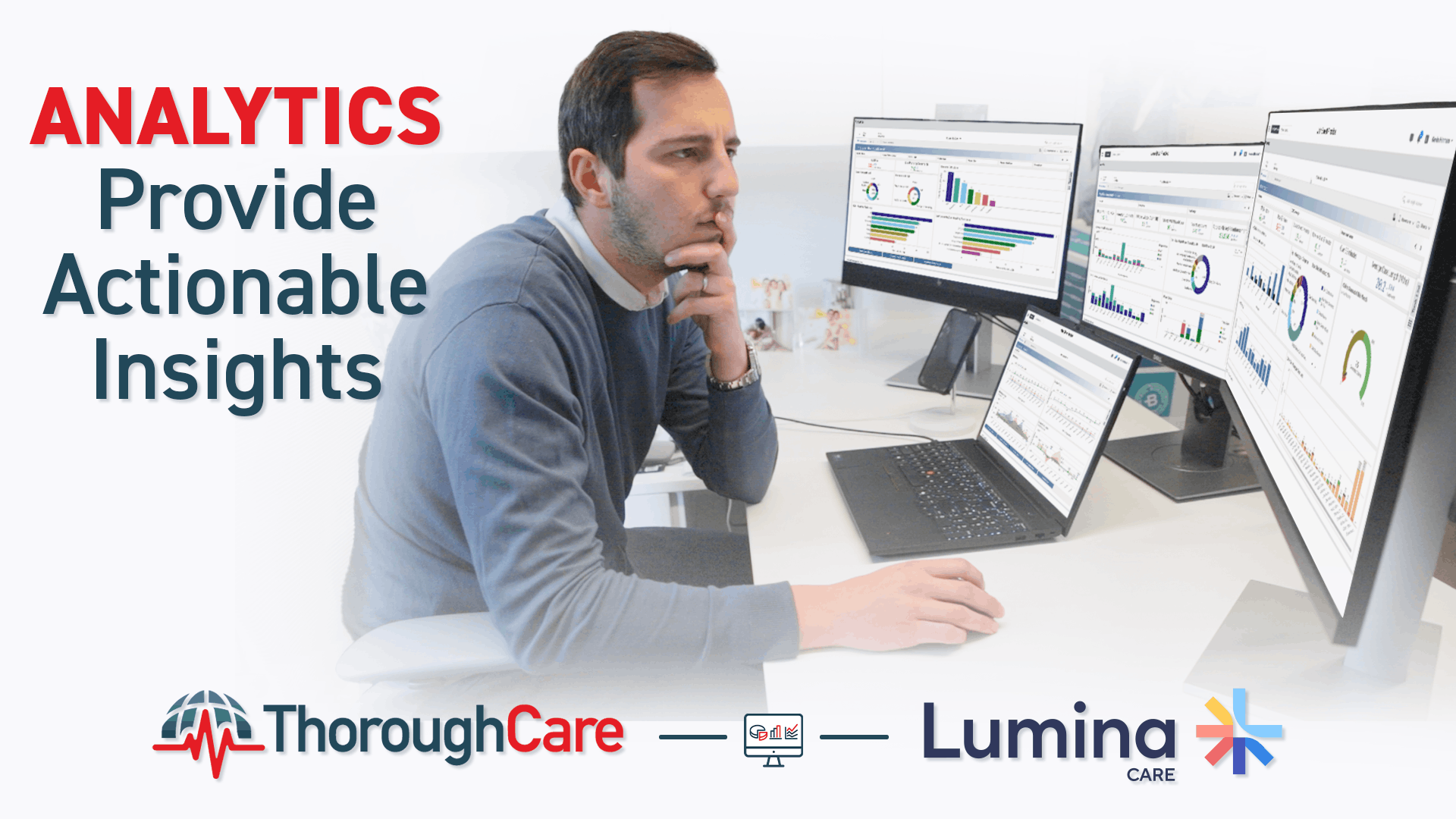
Lumina Care partners with ThoroughCare to utilize their robust analytics and reporting capabilities to service over 27,000 patients across more than 400 facilities across the United States.
By leveraging comprehensive dashboards and reporting tools, care teams can quickly answer critical questions, including:
- How many patients are eligible for a specific program?
- Which patients have already received services?
- What care activities remain outstanding?
- Are there patients requiring follow-up?
- What services have been completed this month?
- What opportunities exist to improve program performance?
This level of visibility allows organizations to move from reactive care management to proactive patient engagement.
Customizable Reporting for Facility Partners
Every healthcare organization and skilled nursing facility has unique reporting requirements.
The ability to customize reporting for daily, weekly, and monthly performance reviews enables care management teams to provide facility partners with meaningful insights into program effectiveness.
Customized reports can help stakeholders understand:
Patient Enrollment Trends
Track the growth and participation rates of eligible patients across care programs.
Service Delivery Performance
Measure how effectively care teams are reaching patients and completing required interventions.
Operational Efficiency
Identify workflow improvements and areas where additional resources may be needed.
Financial Performance
Monitor billing accuracy and ensure that care management activities are properly documented and reimbursed.
By providing actionable data, healthcare organizations can strengthen relationships with facility partners while continuously improving patient care.
Preventing Patients From Falling Through the Cracks
One of the greatest risks in care management is losing visibility when patients transition between facilities, providers, or care settings.
Effective care management technology helps organizations:
- Track patient location changes
- Monitor ongoing care plan requirements
- Manage follow-up tasks
- Ensure continuity of care
- Maintain accurate patient records
This visibility helps prevent care gaps that can negatively affect patient outcomes and organizational performance.
When every patient interaction is tracked and managed through a centralized platform, care teams can maintain confidence that no patient is being overlooked.
Forecasting and Strategic Planning Through Healthcare Analytics
Healthcare analytics is about more than reporting past performance.
Advanced care management platforms also support forecasting and strategic planning by helping organizations understand:
- Expected patient volumes
- Program growth opportunities
- Staffing requirements
- Revenue projections
- Service utilization trends
These insights allow healthcare leaders to make informed decisions about future growth while maintaining high standards of patient care.
Supporting Value-Based Care Success
As healthcare continues its transition toward value-based care, organizations must demonstrate measurable outcomes while efficiently managing resources.
Care management analytics provide the visibility needed to:
- Improve patient engagement
- Increase program participation
- Reduce care gaps
- Support quality initiatives
- Enhance operational performance
- Drive better patient outcomes
Organizations that can effectively measure and manage these activities are better positioned for long-term success in value-based care environments.
How ThoroughCare Helps Growing Organizations Scale Care Management
For rapidly growing organizations like Lumina Care, having a scalable technology platform is essential.
ThoroughCare's analytics dashboards and reporting capabilities provide care teams with the tools they need to:
- Manage large patient populations
- Track eligibility and enrollment
- Monitor care delivery activities
- Support follow-up workflows
- Improve forecasting accuracy
- Maintain billing compliance
- Deliver exceptional patient care
By combining care management workflows with actionable analytics, organizations can confidently scale operations while ensuring patients receive the services they need.
The Future of Care Management Is Data-Driven
As patient populations grow and healthcare delivery becomes more complex, organizations need more than spreadsheets and manual tracking processes.
Modern care management requires real-time analytics, customizable reporting, and complete visibility into patient populations.
For healthcare organizations serving skilled nursing facilities, these capabilities are no longer optional—they are critical to delivering consistent, high-quality care and achieving success in a value-based healthcare landscape.
Organizations that invest in advanced care management technology will be best positioned to improve patient outcomes, strengthen facility partnerships, and support sustainable growth for years to come.
Frequently Asked Questions
What are care management analytics?
Care management analytics are reporting and data analysis tools that help healthcare organizations track patient populations, monitor care delivery activities, measure program performance, identify care gaps, and improve operational efficiency. These analytics provide real-time visibility into patient outcomes and support informed decision-making across care management programs.
Why are analytics important for skilled nursing facility care management?
Analytics help skilled nursing facility care teams identify eligible patients, monitor care plan completion, track patient transitions, manage follow-up activities, and measure program success. By providing actionable insights, analytics help ensure patients receive appropriate services while improving operational performance and care quality.
How do healthcare organizations use care management dashboards?
Care management dashboards provide a centralized view of patient populations, program enrollment, completed services, outstanding tasks, and performance metrics. Healthcare organizations use dashboards to monitor daily operations, improve workflow efficiency, forecast program growth, and support value-based care initiatives.
What are the benefits of customizable healthcare reporting?
Customizable healthcare reporting allows organizations to tailor reports to the needs of facility partners, leadership teams, and operational staff. Benefits include improved visibility into patient outcomes, better performance tracking, more accurate forecasting, stronger stakeholder communication, and enhanced compliance monitoring.
How can analytics help prevent patients from falling through the cracks?
Analytics platforms help care teams track patient eligibility, monitor care plan progress, manage follow-up requirements, and identify patients who may need additional attention. This visibility helps reduce care gaps and supports continuity of care as patients move between providers, facilities, or care settings.
What role does technology play in population health management?
Technology enables healthcare organizations to manage large patient populations more effectively by automating workflows, tracking patient engagement, identifying care gaps, and providing actionable insights through analytics. These capabilities help improve outcomes while reducing administrative burden on care teams.
How do care management platforms support value-based care?
Care management platforms support value-based care by helping organizations coordinate services, improve patient engagement, monitor quality metrics, reduce care gaps, and document outcomes. Analytics and reporting tools allow providers to demonstrate performance improvements and support reimbursement tied to quality measures.
What should healthcare organizations look for in a care management analytics platform?
Healthcare organizations should look for a platform that offers real-time dashboards, customizable reporting, patient eligibility tracking, care coordination tools, workflow management, compliance support, billing visibility, and scalable analytics capabilities that can grow alongside their programs.
How can analytics improve operational efficiency in healthcare?
Analytics improve operational efficiency by identifying workflow bottlenecks, tracking staff productivity, monitoring service completion rates, forecasting patient volume, and providing data-driven insights for resource allocation. This helps organizations optimize operations while maintaining high-quality patient care.
How does ThoroughCare help organizations manage growing patient populations?
ThoroughCare helps organizations manage growth by providing centralized care management workflows, patient tracking, analytics dashboards, customizable reporting, follow-up management tools, and billing support. These capabilities help healthcare teams maintain visibility across their patient populations while scaling operations and improving care delivery.