.jpg "Daniel Godla")
What You'll Learn in This Article
Accountable Care Organizations (ACO) want to coordinate care more effectively while navigating increasingly sophisticated payment structures. This involves using data in real time and building systems capable of long term performance.
- Care management is now being viewed as core operational infrastructure inside ACOs. Discussions are focused on how care management integrates into the broader operating model, including physician workflows, longitudinal patient engagement, and financial sustainability.
- Leaders across the conference appeared to recognize immediately that ACO LEAD, a new CMS model, represents something materially different from previous initiatives.
- Few topics reflected the changing tone of the conference more clearly than artificial intelligence. AI is now being discussed as an operational reality for ACOs rather than a future concept.
There was a noticeable shift in the conversations at The Texas Association of ACOs (TXAACOs) conference this year.
It was not because value-based care has become less complicated. If anything, the environment continues to grow more operationally demanding.
Benchmarks are tightening, models are evolving, and organizations are being asked to navigate increasing financial accountability while simultaneously improving outcomes and patient experience.
What stood out most was the maturity of the dialogue.
The conversations in Texas were no longer centered on whether organizations should participate in value-based care. That debate is largely over.
With CMS continuing to push toward a future where all Traditional Medicare beneficiaries are connected to an accountable care relationship by 2030, many organizations are now focused less on entry into value-based care and more on how to build scalable, sustainable infrastructure capable of supporting long-term growth and performance.
The focus has shifted toward a far more sophisticated question: how do Accountable Care Organizations (ACO) build operational models capable of performing consistently in an increasingly complex environment?
Across sessions, executive discussions, and hallway conversations, five themes emerged repeatedly. Some were expected. Others reflected how quickly the market is evolving.
1. Care Management Has Officially Moved from Support Function to Strategic Infrastructure
One of the clearest takeaways from TXAACOs was the degree to which care management is now being viewed as core operational infrastructure inside ACOs.
That evolution feels significant.
Historically, many organizations approached care management as a complementary program layered onto existing operations. Today, leading ACOs increasingly view it as central to performance itself, regardless of whether the organization’s primary focus remains fee-for-service programs, advanced value-based arrangements, or a hybrid of both.
The conversation has matured beyond enrollment counts and outreach campaigns. Discussions are now focused on how care management integrates into the broader operating model, including physician workflows, longitudinal patient engagement, quality execution, and financial sustainability.
This shift reflects a broader industry realization that scalable accountable care cannot exist without scalable care coordination. Organizations that continue treating care management as an isolated initiative may find themselves increasingly challenged as value-based models continue to evolve.
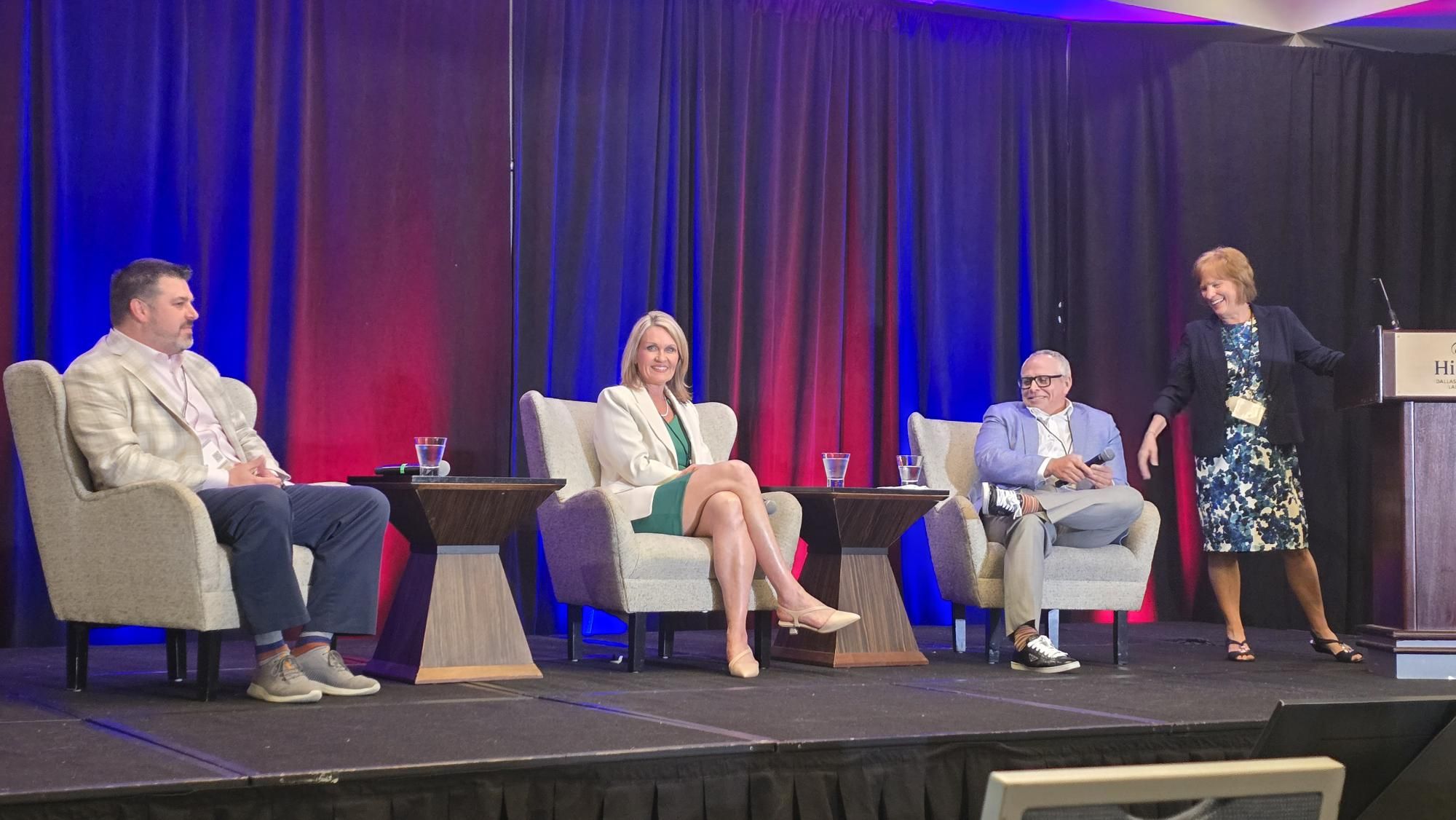
That perspective was reinforced during the panel discussion Built In, Not Bolted On: The Future of Care Management in ACOs, where I had the opportunity to join other industry leaders in discussing the growing need for care management models.
We talked about how care management is best when fully embedded into operational strategy rather than layered on as disconnected programs.
The conversation reflected a broader reality emerging across the market: care management is increasingly becoming the connective tissue between quality performance, patient engagement, operational execution, and long-term financial sustainability.
2. The ACO LEAD Model Is Generating Serious Attention and Serious Analysis
One of the topics that generated the most consistent discussion throughout TXAACOs was the CMS LEAD model.
What stood out was not simply enthusiasm surrounding the program, but the level of strategic analysis taking place around it. Leaders across the conference appeared to recognize immediately that LEAD represents something materially different from previous CMS initiatives.
There was a strong sense that organizations are still working through what participation may ultimately require from an operational, financial, and infrastructure perspective.
That distinction matters.
The reaction did not feel cautious in a negative sense. Rather, it reflected the growing sophistication of ACO leadership teams. Organizations appear increasingly disciplined about evaluating long-term model alignment before making significant strategic commitments.
In many ways, the conversation surrounding LEAD reflected a broader trend across accountable care.
ACOs are no longer pursuing participation simply for the sake of participation. They are evaluating whether they possess the operational foundation necessary to succeed sustainably within increasingly advanced models.
3. ACOs Are Prioritizing Efficiency, Coordination, and Operational Execution
Another recurring theme throughout TXAACOs was the growing emphasis on operational efficiency.
In conversations throughout the conference, ACO leaders repeatedly came back to the challenge of scaling execution across networks, teams, and patient populations without creating additional fragmentation or administrative burden.
There was clear interest in solutions capable of improving collaboration, streamlining workflows, and reducing friction across care delivery environments. Importantly, the appetite was not for theoretical innovation. It was for practical infrastructure that supports measurable execution.
That distinction is becoming increasingly important in value-based care.
Many organizations already possess data. Many already understand the broad strategic objectives associated with accountable care. The challenge now lies in operationalizing those strategies consistently across real-world environments where variability, workforce strain, and workflow complexity continue to intensify.
The organizations that appear best positioned moving forward are not necessarily the ones with the most ambitious vision statements. They are the ones building repeatable systems capable of producing consistent performance at scale.
That emphasis on scalability surfaced repeatedly throughout the conference.
As accountable care participation continues to expand, organizations appear increasingly focused on building operational models capable of supporting long-term sustainability without creating additional workforce strain or fragmentation across clinical and administrative teams.
4. ACCESS Is Being Watched Carefully, But Adoption Appears Measured
The ACCESS model generated a great deal of curiosity throughout the conference, although most organizations appeared notably measured in their approach toward early adoption.
Many organizations appear interested in observing how the program develops following launch before aggressively pursuing participation themselves.
That restraint should not be interpreted as resistance.
If anything, it reflects how much more disciplined the accountable care market has become.
ACO leadership teams are evaluating new models with increasing rigor, particularly as downside exposure, compliance complexity, and operational demands continue to expand.
There is a growing recognition that timing matters. Strategic patience, in some cases, may prove just as valuable as early adoption.
For many organizations, the current priority appears to be understanding how ACCESS evolves in practice before determining where and when participation makes sense within broader enterprise strategy.
5. AI is an Operational Reality, Beyond Curiosity
Few topics reflected the changing tone of the conference more clearly than artificial intelligence. AI is now being discussed as an operational reality rather than a future concept.
Speakers across multiple sessions referenced its growing role in care management, workflow optimization, analytics, and organizational decision-making. More importantly, the tone surrounding these discussions has changed noticeably from even a year ago.
The conversation is no longer centered primarily on whether AI will impact healthcare. Most leaders now appear focused on a more practical set of questions:
-
How should organizations govern adoption responsibly?
-
How do healthcare leaders balance innovation with oversight and trust?
Increasingly, the conversation is shifting toward how organizations create sustainable human-AI workflows. Leaders are considering where automation supports clinical and operational teams without replacing human oversight, validation, and decision-making.
Sessions like AI’s Trust Tipping Point: The Rules of the Road, led by Bryan Rotella, reinforced that the next phase of AI adoption in healthcare will not simply be defined by innovation alone.
The conversation focused heavily on governance, trust, regulatory responsibility, and the operational realities organizations must navigate as AI becomes increasingly integrated into clinical and administrative workflows.
Perhaps most importantly, Rotella’s panel reflected a growing recognition across the industry that responsible implementation, not just rapid adoption, will ultimately determine where AI creates sustainable value inside accountable care.
Final Perspective
If TXAACOs 2026 demonstrated anything, it is that accountable care has entered a more operationally mature phase. The industry conversation is no longer centered primarily on aspiration or experimentation. It is increasingly focused on execution, infrastructure, sustainability, and scale.
ACOs are looking for ways to coordinate care more effectively, navigate increasingly sophisticated payment structures, operationalize data in real time, and build systems capable of sustaining performance over the long term.
At ThoroughCare, those themes felt deeply familiar because they reflect the same challenges many ACO leaders are actively working through every day. The growing emphasis on embedded care management, workflow alignment, scalable coordination, and responsible AI adoption reinforces where the market is heading and why operational infrastructure matters more than ever.
Value-based care is no longer defined by strategy alone. Increasingly, success depends on whether organizations can translate strategy into consistent execution across clinical, operational, and financial environments simultaneously.